
Professional Manufacturer of Cardboard Cat Scartchers

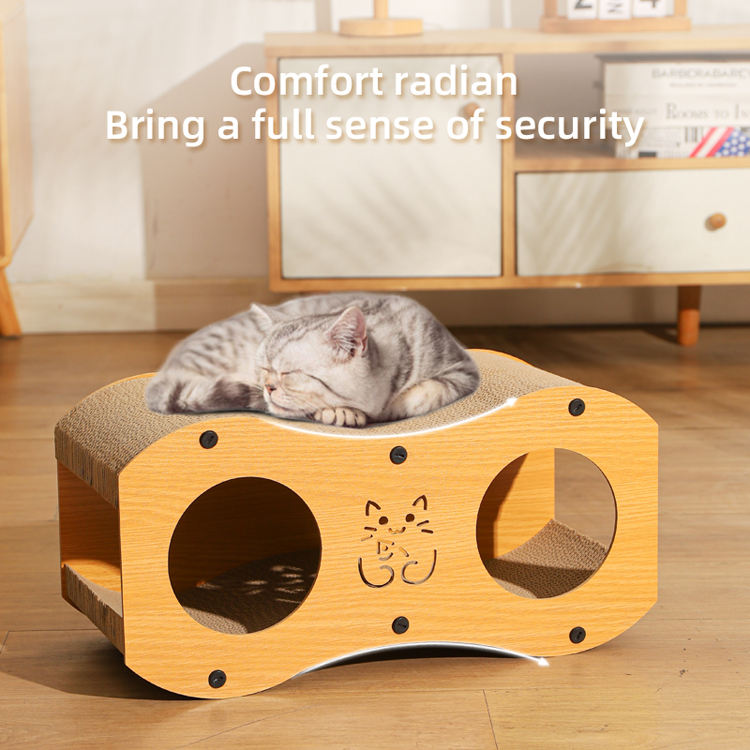
The global pet industry is undergoing a quiet transformation. As cat ownership continues to rise, cat scratchers — once seen as simple consumables — are evolving into well-designed, sustainable, and multi-functional pet products.
This shift reflects broader changes in consumer expectations, retail strategies, and environmental awareness.
Cardboard has become one of the most widely adopted materials in cat scratcher manufacturing. Compared to plastic and composite materials, cardboard offers:
Lower environmental impact
Easier recycling and disposal
Reduced transportation emissions due to lighter weight
For many consumers, sustainability is no longer a “nice-to-have” feature, but a baseline requirement when choosing pet products.
Modern cat owners increasingly favor products that deliver multiple benefits in a single item. Today’s cat scratchers often combine scratching, play, rest, and enrichment in one design.
This trend is driven by:
Limited living space in urban homes
Increased focus on indoor cat enrichment
A desire for products that justify long-term value
Multi-functional designs are gradually replacing flat, single-purpose scratch boards.
Pet furniture is no longer hidden in corners. Consumers now expect cat products to blend with home interiors, leading to cleaner lines, neutral colors, and thoughtful structures.
Design-driven pet products help brands:
Differentiate in crowded marketplaces
Appeal to lifestyle-focused consumers
Increase perceived value without significantly increasing cost
From a retail and wholesale standpoint, successful cat scratcher products tend to share several traits:
Lightweight and easy to ship
Consistent quality across repeat orders
Flexible options for private labeling and packaging
These factors are especially important for cross-border e-commerce and international distribution.
The evolution of the cat scratcher market reflects a larger trend within the pet industry: products must balance function, sustainability, and design.
Brands that understand these priorities are better positioned to adapt to changing consumer expectations and long-term market growth.